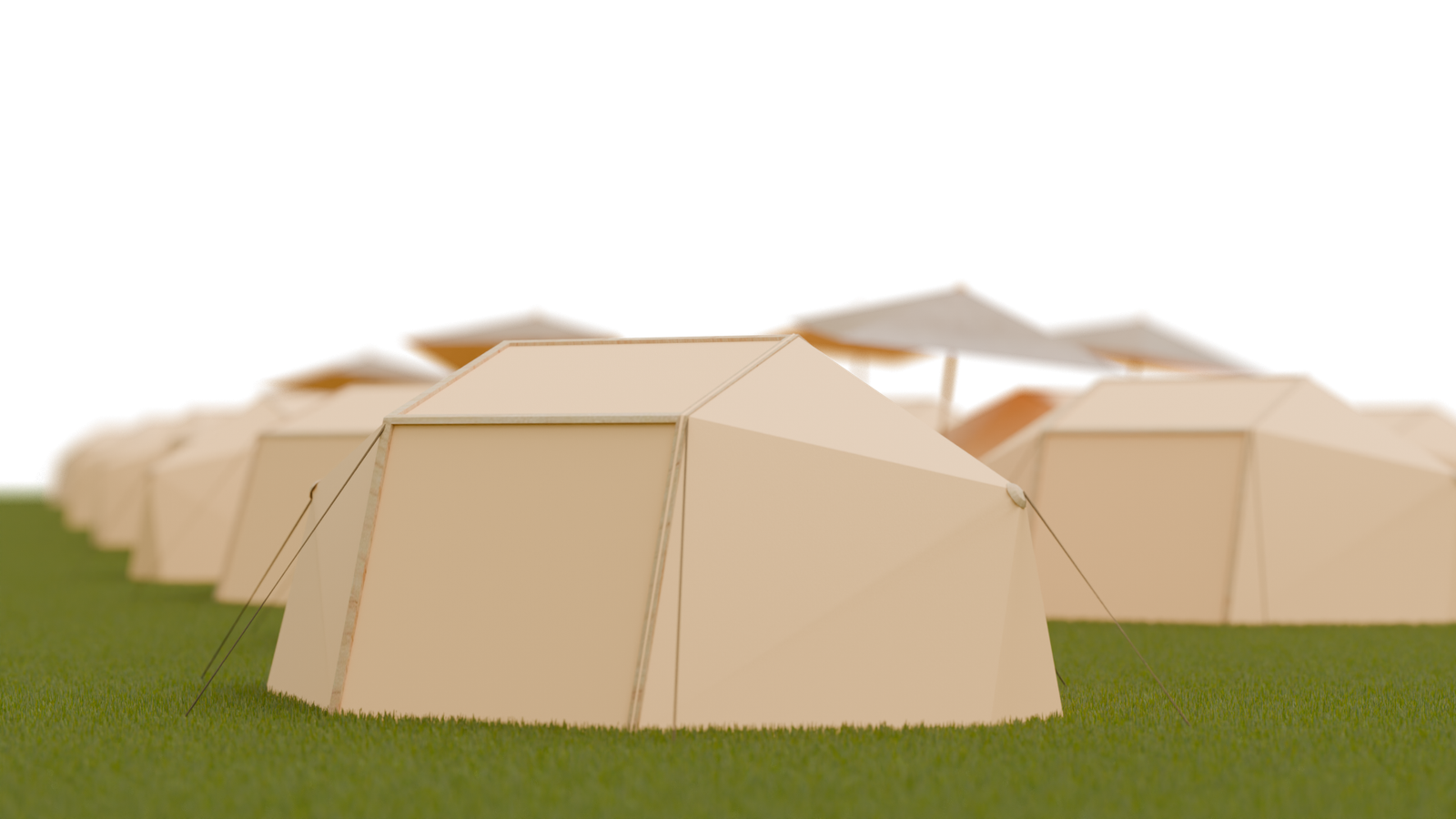
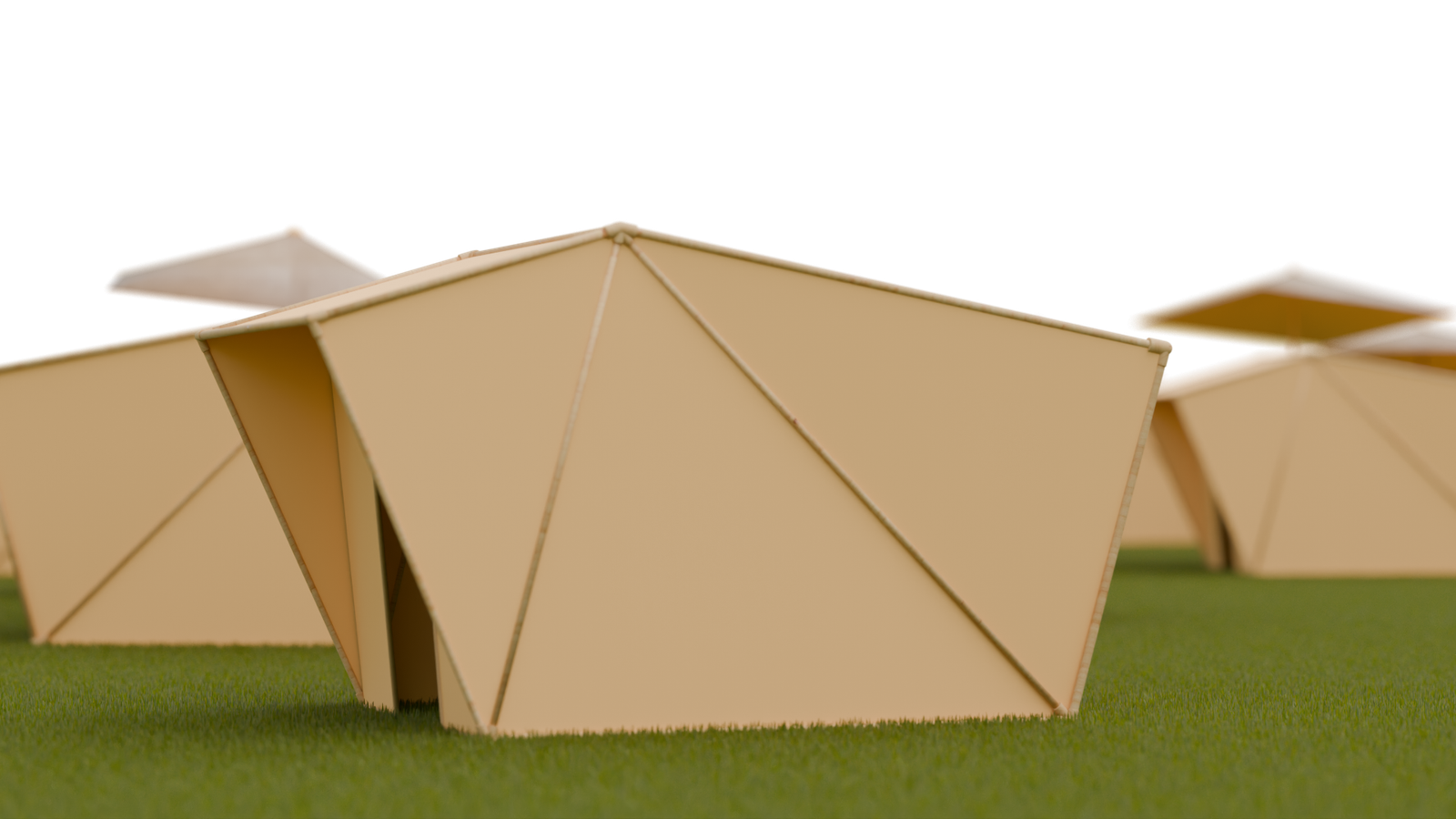
We put our tent through independent testing. Here's what we learned.
When you tell people you've built a festival tent from paper, the first question is always the same: does it actually hold up?
It's a fair question—and we didn't want to answer it with marketing. So we sent our material to Norner, an independent, accredited materials laboratory, and asked them to test it properly.
1. Testing for real conditions, not a lab bench
Norner ran our coated kraft paper through accelerated weathering - controlled exposure to UV light and moisture, designed to simulate what a material experiences outdoors over time. Roughly two hours in the chamber equals a full day of real exposure, so a few weeks of testing compresses months of festival-season weather into a single run.
We measured the two things that matter most for a tent: how much strength the material keeps, and how well it resists tearing.
2. The most important lesson: tearing, not stretching, is what counts
Early on, we assumed tensile strength - how hard you can pull the material before it breaks - would be the number to watch. The testing told us otherwise.
In practice, a tent doesn't fail because someone pulls the fabric apart. It fails when a small tear starts at a stress point - a peg, a seam, a guy-line - and spreads. That means tear resistance, not raw tensile strength, is what actually keeps a tent standing. It changed how we design every stress point in the structure: reinforced fields, larger contact areas, and as few holes through the fabric as possible.

3. The result: built for festivals, with margin to spare
Here's the number we're proud of. After exposure equal to roughly six months outdoors, our material lost only about 13% of its tear strength.
A festival lasts two to fourteen days. Six months of simulated weather is many times more than any festival tent will ever see in use - and the material came through with the vast majority of its strength intact. For the job it's built to do, that's a large safety margin.
4. And it keeps the rain out
A tent also has to stay dry inside. Our kraft paper carries a thin layer of plant-based PHA bioplastic that makes the surface water-repellent. Even after accelerated weathering, water still beads up and rolls off rather than soaking in - exactly what you want over a wet festival weekend.
Why this matters
Anyone can call a product sustainable. Far fewer can show independent, third-party data behind the claim. For the festivals and sponsors we work with, that difference is everything: it turns a nice story into a documented, defensible decision they can stand behind in their own sustainability reporting.
Our tent is now at TRL 5 — validated under simulated conditions — and moving toward full-scale prototyping ahead of pilot projects in the 2027 festival season.
The tent that disappears is no longer just an idea. It’s a material we’ve tested, understood, and are building around.
Interested in a 2027 pilot? Get in touch at lets@greenstartnow.com.